Missing Tombs of Alexander the Great and Cleopatra VII
Two of the ancient world's most famous figures—a conqueror who reshaped the known world and a queen who defied Rome—lie in tombs that have never been found.
Alexander the Great died in Babylon in 323 BC at the age of 32, having carved out an empire from Greece to India. Cleopatra VII, the last pharaoh of Egypt, died by her own hand in 30 BC, bringing the Ptolemaic dynasty to an end. Their bodies were interred with extraordinary ceremony. And then, they vanished.

The search for their final resting places has captivated archaeologists, historians, and treasure hunters for over two millennia. Here is what we know—and what remains tantalizingly out of reach.
Alexander the Great: The Conqueror Who Disappeared
The Journey of a Body
Alexander's body became a prize before it was even cold. His generals fought over who would possess his remains, understanding that whoever held the conqueror's body held a claim to his legacy. Ptolemy, one of Alexander's most trusted generals and the future ruler of Egypt, intercepted the funeral procession and diverted the embalmed body to Egypt.
Initially, Alexander was laid to rest at Memphis, the ancient capital of Egypt. His tomb there became a site of pilgrimage. But it was not to be his final resting place.
Alexandria's Royal Soma
Ptolemy's successor, Ptolemy II Philadelphus, later transferred Alexander's body to Alexandria, the new capital that bore the conqueror's name. There, it was placed in a magnificent mausoleum known as the Soma (or Sema), a royal burial complex that also housed the remains of the Ptolemaic kings.
For centuries, the Soma was one of Alexandria's most revered sites. Roman emperors, including Augustus, Hadrian, and Caracalla, visited Alexander's tomb to pay their respects. Caracalla may have been the last person to view the body. After that, the trail goes cold.
What Happened to the Missing Tomb?
The Soma's location was lost amid Alexandria's tumultuous history. The city suffered devastating earthquakes, tsunamis, and geological changes over the centuries. Parts of ancient Alexandria now lie submerged beneath the Mediterranean Sea. The tomb was likely damaged or destroyed during the political and religious upheavals of late antiquity.
Some accounts suggest the missing tomb was deliberately dismantled or its contents scattered. The Roman Emperor Theodosius I's decrees against pagan monuments may have sealed its fate. By the 4th century AD, Church Father John Chrysostom lamented that he could not find Alexander's tomb.
Where Could It Be?
Several theories persist:
Beneath Modern Alexandria: Many believe the tomb lies somewhere beneath the modern city. Alexandria was built and rebuilt over centuries, burying its ancient past deep underground.
Submerged Off the Coast: The destruction of the ancient royal quarter by earthquakes and tsunamis may have sent the tomb into the Mediterranean.
The Siwa Oasis: Alexander famously visited Siwa, where the Oracle of Amun declared him the son of Zeus-Ammon. Some speculate he may have wished to be buried there.
The Siwa Oasis Discovery: In 2024, reports emerged of a tomb near the ancient Siwa Oasis in Egypt's western desert. Three stone tablets with Greek inscriptions were found, one apparently by Ptolemy I, describing how he brought Alexander's body there. The tomb entrance featured two stone lions and a long corridor leading to a burial vault. However, experts cautioned that the tomb's discovery does not prove Alexander was buried there.
The Vergina Connection
In 2024, a tantalizing discovery emerged from Greece. A team of archaeologists identified a piece of purple-and-white fabric discovered decades ago in a royal tomb at Vergina in northern Greece as possibly belonging to Alexander's sacred tunic or "chiton". While this does not locate his tomb, it suggests that relics associated with Alexander may still be found in unexpected places.
Cleopatra VII: The Queen Who Vanished with Her Lover
The Last Pharaoh's Final Request
After her defeat by Octavian, Cleopatra chose death over humiliation. According to ancient historians, she was buried beside her lover, Mark Antony, in a tomb she had commissioned. The tomb was described as "surpassingly beautiful".
Plutarch's account, based on eyewitness reports, locates the tomb near the palace in Alexandria. Octavian, the victor of the war, permitted the couple to be buried together, honoring Cleopatra's final wish. The tomb remained a place of veneration for centuries.
The Alexandrian Hypothesis
The most widely accepted theory places Cleopatra's tomb in or near Alexandria's royal quarter. Statius, a Roman poet writing more than a century later, described the tomb as a tourist attraction. This suggests it was still standing—and accessible—well into the Roman period.
However, the ancient city of Alexandria suffered catastrophic earthquakes and tsunamis in the centuries following Cleopatra's death. The royal quarter, where the tomb was located, was among the areas most affected. Much of it now lies submerged under the Mediterranean.
The Taposiris Magna Theory
For two decades, the most persistent search for Cleopatra's tomb has been led by Kathleen Martínez, a Dominican lawyer-turned-archaeologist. Since 2005, Martínez has been excavating Taposiris Magna, an ancient city about 40 kilometers (25 miles) west of Alexandria. She believes the temple there was built to house the queen's tomb.
Martínez's team has made a series of discoveries that she interprets as evidence pointing toward Cleopatra:
A small white marble bust of a woman wearing a royal crown, which Martínez believes may depict Cleopatra
337 coins featuring representations of Cleopatra
Ceremonial pottery, oil lamps, bronze statues, and a limestone cosmetic container
A tunnel system connecting Lake Mariout to the Mediterranean Sea
A submerged port near Taposiris Magna, discovered with the help of marine explorer Bob Ballard, featuring towering columns, amphorae, anchors, and a polished floor
Most intriguingly, the team discovered a submerged tunnel connecting the port to the temple, suggesting a secret route for transporting the queen's body.
However, many archaeologists remain skeptical. The bust's facial features differ from known depictions of Cleopatra, and it may represent another royal woman. As Duane W. Roller, a scholar of Cleopatra, stated: "There is no evidence for this, either archaeological or literary, and it is certain that Cleopatra was buried at or near the tombs of her ancestors in Alexandria".
Why the Search Continues
The debate between the Alexandrian and Taposiris Magna theories reflects a deeper divide in Cleopatra scholarship. One camp argues that the literary evidence unequivocally places the tomb in Alexandria. The other points to the tantalizing archaeological finds at Taposiris Magna and argues that the geological destruction of Alexandria has made the search there nearly impossible.
The discovery of the sunken port in 2025 has reignited interest in Martínez's theory. If the tunnel and port were indeed used to transport Cleopatra's body secretly, the queen's tomb could lie beneath the sea, waiting to be found.
Conclusion
The tombs of Alexander the Great and Cleopatra VII remain two of history's greatest unsolved mysteries. Alexander's mausoleum, once visited by Roman emperors, was lost to Alexandria's turbulent history. Cleopatra's tomb, described as surpassingly beautiful by ancient writers, has eluded every search.
The most promising leads point in different directions: Alexander toward the Siwa, Cleopatra toward Taposiris Magna or the submerged ruins of ancient Alexandria. Yet neither tomb has been definitively found.
About the Author
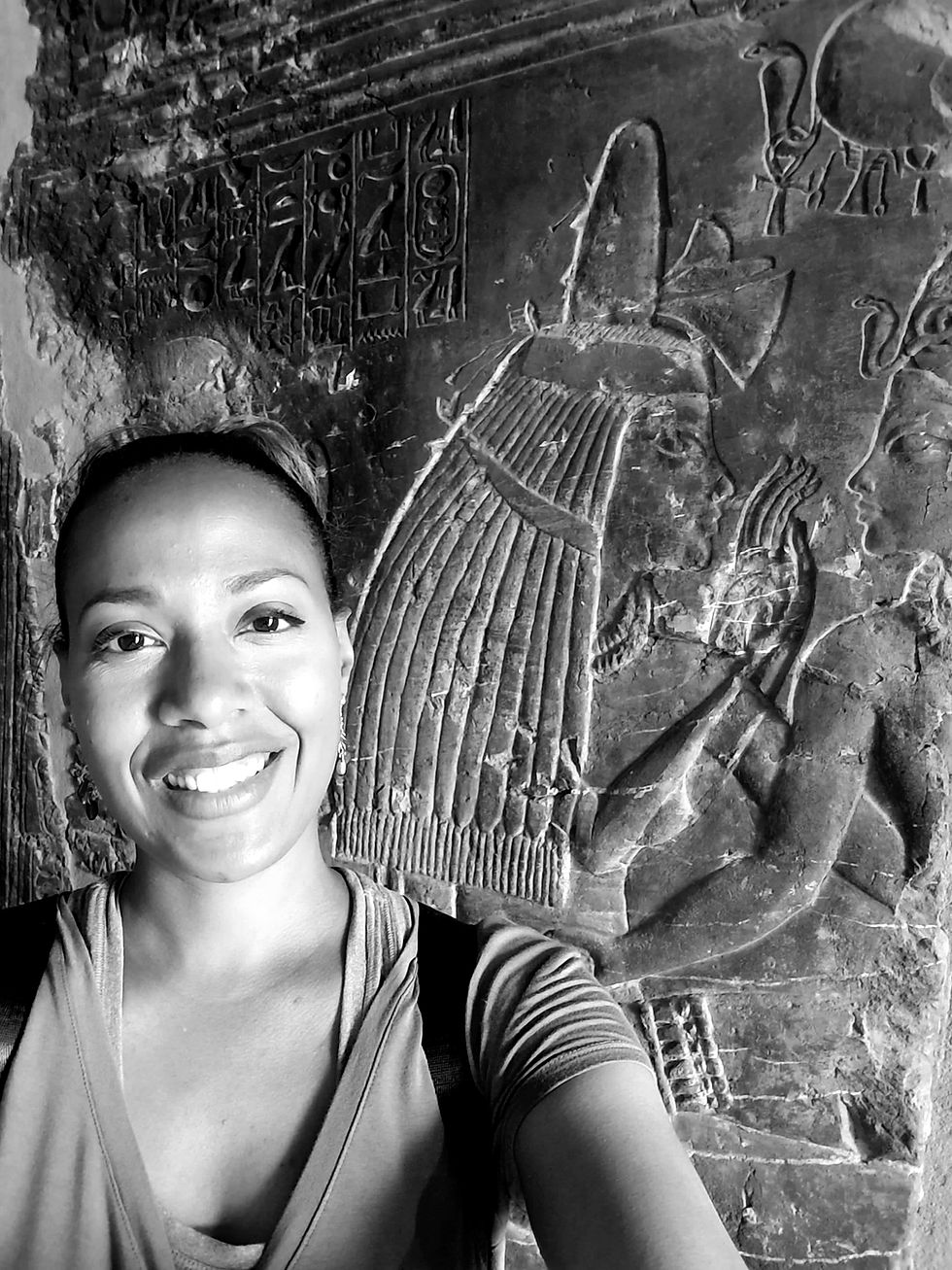
Amanda Victoria Chance, MD, is an Internal Medicine board-certified physician reviving ancient healing practices. Also certified in Lifestyle Medicine, she bridges millennia-old vibrational wisdom with evidence-based lifestyle interventions-- including nutrition, stress resilience, and non-pharmacological therapies-- to activate whole person care. She co-leads transformative healing journeys in Egypt with her husband-- including resonance-based experiences inspired by Saqqara's legendary "healing hospital," a site documented in Gaia's The Pyramid Code through her husband's grandfather's archival legacy.


Comments