The Egyptian Sebou': The 7th-Day Ritual & The Ancient Science of Sonic Swaddling
Updated: Sep 29
In the rhythm of Egyptian life, a profound convergence occurs on the seventh day after birth. The celebration known as the Sebou’ (السُبوع) is more than a festive naming ceremony. It is a carefully orchestrated auditory initiation—a living tradition that bridges ancient neurobiology with enduring cultural wisdom. Where modern joy meets ancient science, the Sebou’ offers a remarkable case study in how cultures intuitively design human development through sound.
To understand why the seventh day matters, we must begin before birth.

Before Birth: The Senses Begin in the Womb
Human sensory development starts long before delivery. Touch is the first sense to emerge, beginning around 7–8 weeks of pregnancy. Other senses follow in sequence. By birth, all five senses are present, but they are not equally mature. Touch, smell, and hearing are the most advanced, while vision and taste continue developing after birth.
Hearing is especially important. In the womb, the fetus is already immersed in a soundscape: the mother’s heartbeat, the rush of blood, muffled voices, and visceral murmurs. This prenatal rhythm becomes the brain’s first reference for safety and familiarity.
After Birth: The Newborn’s Sensory World
In the first days after birth, the newborn is not a blank slate but an active sensory learner.
Touch remains crucial for bonding and soothing. Skin-to-skin contact, cuddling, and swaddling comfort the infant. Newborns are sensitive to temperature and texture, react to cool breezes or the feel of a blanket, and show survival reflexes such as rooting when touched.
Smell is also well developed. Babies recognize their mother’s scent and quickly learn to distinguish familiar people. Taste is present, with a clear preference for sweet flavors.
Hearing is functional at birth, though fluid in the ear may initially muffle sound. Very soon, infants recognize familiar voices, respond to noises, and prefer high-pitched voices. They are already learning to process sound, even though auditory development continues.
Vision is the least developed sense. Newborns focus best on objects about 8–12 inches away and prefer high-contrast patterns. Sight and taste continue to mature after birth.
By 7 days old, the baby has active senses. Touch and smell are well developed, hearing is sharp but still maturing, and sight and taste are developing rapidly. This is the exact window in which the Sebou’ takes place.
The Ritual Architecture of the Egyptian Sebou'
The Sebou' is the child's formal induction into the human sensory world through four core rituals, each a lesson in perception:
1. The Amsaha (المنخه) – The Sifting Rhythm
The infant is cradled in a large sieve and gently rocked by a elder.
The Surface Symbolism: Purification, sifting out evil.
The Acoustic Reality: The shifting creates a low-frequency, rhythmic vestibular-auditory stimulus that directly mimics the womb's soundscape—the mother's heartbeat and visceral murmurs. It wires the primitive brainstem to associate rhythmic motion with absolute safety, establishing predictability as the foundation of being.
2. The Procession & Zaghrouta (الزغرطة) – Mapping Social Sound
The baby is paraded around a circle of women who bang on mortar and pestles, ululate, clap, and sing. People join in the celebration by singing "Halaatak Bergalatak," a song that expresses wishes for happiness and joy for the newborn.
The Surface Symbolism: Community welcome and blessing.
The Neuroscientific Function: This is spatial hearing calibration. As sounds move around the infant in 360 degrees, they develop:
Sound Localization (orienting toward voices)
Social Sound Coding (linking energetic, complex vocalizations with faces that are about 20 - 30 cm (8-10 inches) away from them)
The brain learns its first social equation: "These layered human sounds mean joy, safety, and belonging."
3. The Kanza (الكنزة) & Naming – The Acoustics of Intention
In some ceremonies, the baby touches symbolic objects before their name is announced. It involves placing a decorated jug, seven types of seeds/legumes, coins, and candles on a tray, often involving rituals for good luck and prosperity.
The Surface Symbolism: Divining destiny and establishing identity.
The Developmental Programming: This sequence teaches auditory attention modulation. The room hushes, then focuses with intentional language. The clear, repeated enunciation of their name provides the ultimate auditory anchor—a unique sonic signature that the brain will recognize before all others, forging the neural pathway between sound and self.
4. The Bitter & Sweet – Multisensory Framing
A bitter drop, then sweet drink, is dabbed on lips with verbal explanation.
The Surface Symbolism: Life's contrasting experiences.
The Perceptual Lesson: This is foundational multisensory integration. The novel taste sensations are paired with specific vocal narration and comforting touch, teaching that human language will interpret and frame sensory experience.
In addition to celebrating the child's survival and encouraging ongoing development, the seventh-day celebrations aim to open the newborn's ears to the sounds of the world. Family members achieve this by banging a mortar and pestle near the infant. The water jug can also be used as an instrument, and younger children often enjoy blowing on them to create sounds.
The Ancient Echo: Why the Seventh Day?
In ancient Egypt, the celebration began with the child’s mother and her friends taking seven pots—used by her in the previous week—to the Nile for washing and filling with water. They added seven drops of kohl and henna to each pot. The mother sprinkled this water around the house to ward off evil spirits. She then carried the child to the Nile, where the grandmother wetted the child’s head and threw the remaining umbilical cord into the river. A sacred gold ring, called the Isis ring, was pierced into the child’s ear. Evidence shows that ear piercing was common for children of both sexes during the New Kingdom period (1550–1070 BC). The Egyptians then prayed to the gods for the child’s protection and instructed the child to obey the gods. The grandmother also soaked seven grains of beans, wheat, or corn in a pot of water next to a jug or flask.
In modern times, the word Sebou’ derives from the Arabic sab’a (seven). In ancient Egypt, seven represented cosmic completion and magical potency. Most significantly, historical and archaeological evidence—noted by scholars such as Salima Ikram and Herodotus—suggests male circumcision was performed around the seventh day in the New Kingdom. In the Old Kingdom, dating to 2686–2181 BC, reliefs show older boys being circumcised. This physical rite of passage in the New Kingdom marked the child’s integration into the social and religious body.
The modern Sebou’ occupies this same ritual chronotope—the sacred seventh-day window—but has evolved from a focus on physical marking to sensory and social marking.
The Auditory Archaeology: Conscious Sonic Design
From our perspective, the Sebou’ reveals an intuitive ancient understanding of neonatal neurology that modern science now confirms.
The critical first-week window: Neonatal neurology identifies the first week as a peak period for auditory cortex mapping, when sound localization and emotional coding of noises are being established. The infant is biologically tuning into their soundscape.
The Sebou’ as applied neuro-acoustics: The ritual does not merely happen to be loud; it is deliberately loud and varied. It does not include silence by accident; it orchestrates silence for contrast. This ritual environment acts as a “sonic swaddle,” providing the optimal, enriched auditory stimuli needed to:
Calm the brainstem via rhythm (Amsaha).
Stimulate the auditory cortex via spatialized complex sounds (Procession).
Engage higher cognitive attention via dynamic range (Kanza/Naming).
Link language to sensation via narrative (Bitter/Sweet).
Conclusion: The First Curriculum
The Sebou’ is therefore far more than a party. It is humanity’s first sensory curriculum, preserved in ritual form. It demonstrates how ancient cultures, through observational wisdom millennia thick, developed practices that align with what we now understand about auditory development.
This ceremony answers the biological imperative of the newborn brain—“Map the sounds that mean survival”—and answers it with cultural brilliance: “Here are the sounds. This rhythm is safety. This chorus is your tribe. This word is your self. You are now part of the song.”
It is the ultimate fusion of archaeo-acoustics and developmental psychology: proof that some of our oldest rituals are, in fact, exquisitely evolved technologies for teaching us how to hear our way into being human.
References/Further Reading
In the book ‘Saba’ Habat’ (Seven Seeds, 2017) author Asmaa Gamal explores the ancient Egyptian and modern day traditions of the sebou’, where she follows the preparations needed for the day, including the shopping sprees for sweets, candles, and gifts.
This article is part of our ongoing exploration.
For the full context and next week's insight, subscribe below.
About the Author
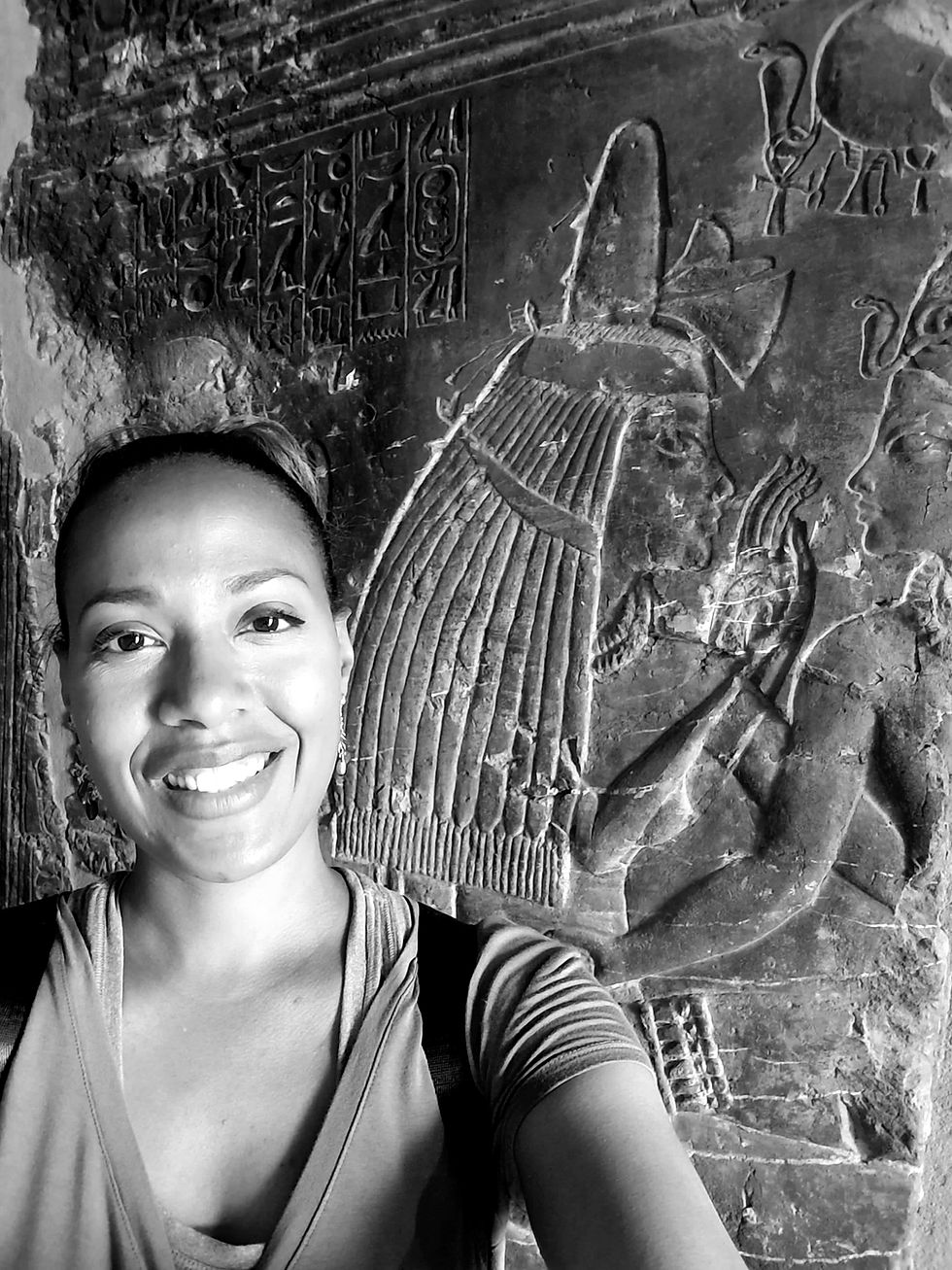
Amanda Victoria Chance, MD, is an Internal Medicine board-certified physician reviving ancient healing practices. Also certified in Lifestyle Medicine, she bridges millennia-old vibrational wisdom with evidence-based lifestyle interventions-- including nutrition, stress resilience, and non-pharmacological therapies-- to activate whole person care. She co-leads transformative healing journeys in Egypt with her husband-- including resonance-based experiences inspired by Saqqara's legendary "healing hospital," a site documented in Gaia's The Pyramid Code through her husband's grandfather's archival legacy.


Comments